
Whether intentional or not, every brand has a voice.
Brand Voice: It’s in the words on your website, the captions on your social media posts, the emails you send, and even how you respond to customer complaints. The question isn’t whether you have a brand voice. The question is: Is it clear, consistent, and memorable?
A strong brand voice helps people recognize you instantly, trust you faster, and feel connected to your brand on a human level. In a world full of noise, your voice is what makes people stop scrolling and start listening.
Let’s talk about how to build a brand voice that sounds real, consistent, and unmistakably yours.
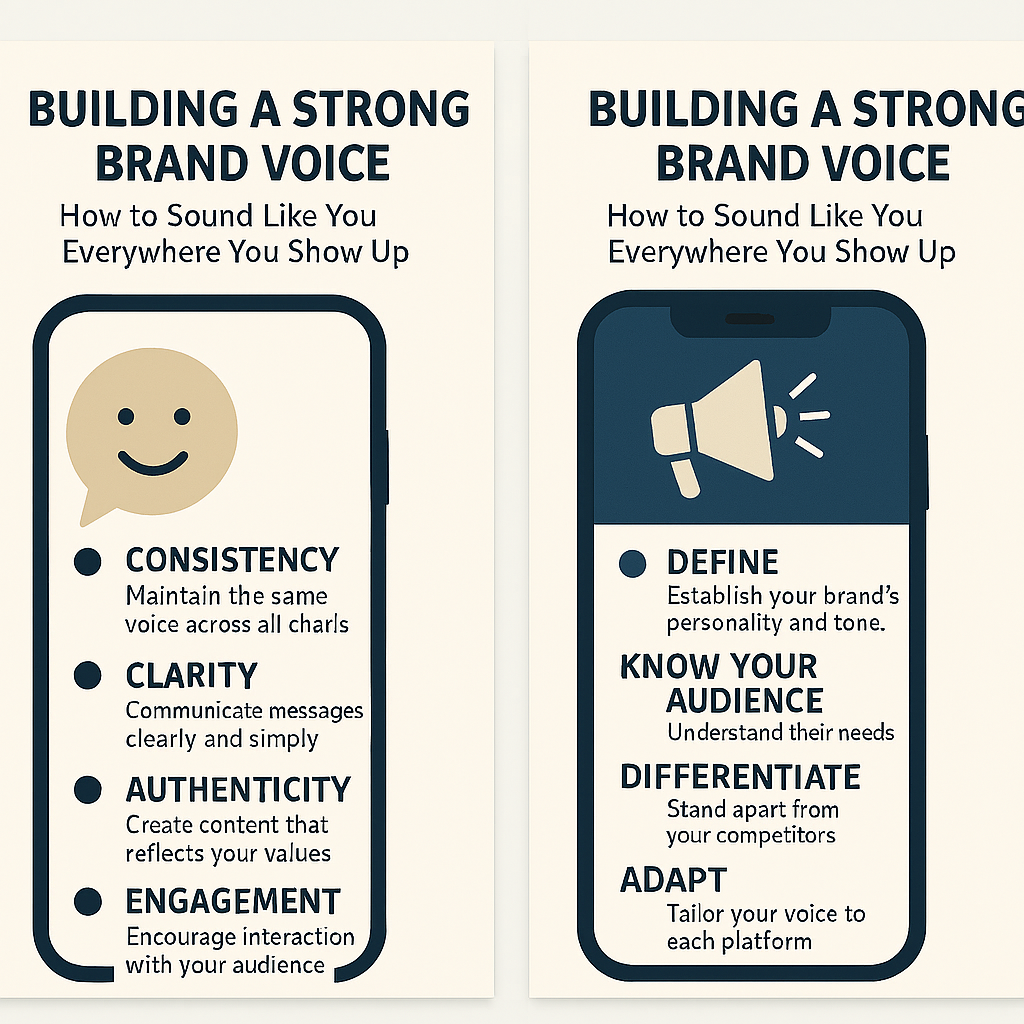
What Is Brand Voice, Really?
Brand voice is the personality of your brand expressed through words. How you say something is just as important as what you say.
Think of brand voice as how your brand would talk if it were a person. Are you friendly or formal? Playful or serious? Bold or calm? Supportive or authoritative?
For example:
- Nike sounds confident and motivating
- Apple sounds simple, thoughtful, and refined
- Duolingo sounds playful, witty, and slightly chaotic
None of these voices are accidental. They’re carefully built and consistently used.
Why a Strong Brand Voice Matters
People don’t connect with products. They connect with personalities.
A clear brand voice:
- Builds trust and credibility
- Makes your brand recognizable across platforms
- Creates emotional connection with your audience
- Helps you stand out from competitors
- Makes content creation easier and more consistent
When your voice is strong, people know what to expect from you. That familiarity creates comfort and comfort builds loyalty.
Step 1: Understand Who You’re Talking To
You can’t build a strong brand voice without knowing your audience.
Ask yourself:
- Who are they?
- What problems are they trying to solve?
- How do they speak?
- What tone do they trust?
- What annoys them?
A brand speaking to corporate executives will sound very different from one speaking to Gen Z creators. Your voice should feel natural to your audience, not forced or trendy.
The goal is not to sound “cool.”
The goal is to sound relevant and relatable.
Step 2: Define Your Brand Personality
This is where your brand voice really starts to take shape.
A simple way to define your brand personality is to choose 3–5 personality traits. For example:
- Friendly
- Confident
- Honest
- Approachable
- Bold
Then ask:
- What does this trait sound like in writing?
- What does it not sound like?
If your brand is friendly, it might use contractions, simple language, and a warm tone. If it’s confident, it avoids apologetic or uncertain wording.
Defining both “we are” and “we are not” is key.
Step 3: Create Clear Voice Guidelines
A strong brand voice isn’t just in your head it’s documented.
Your brand voice guidelines should include:
- Tone description (e.g., friendly but professional)
- Grammar preferences (formal vs conversational)
- Word choices (do you say “clients” or “customers”?)
- Phrases you use often
- Phrases you avoid
This makes sure everyone—from marketers to customer support sounds like the same brand.
Consistency builds trust. Inconsistency breaks it.
Step 4: Keep It Human, Not Perfect
One of the biggest mistakes brands make is trying to sound “professional” at the cost of sounding human.
People don’t talk like legal documents. And brands that do often feel cold and distant.
Human brand voices:
- Use simple, clear language
- Speak like a real person
- Show empathy
- Aren’t afraid of warmth or emotion
You can still be professional and human at the same time. The two are not opposites.
If it wouldn’t sound natural in a conversation, rethink it.
Step 5: Be Consistent Across Every Touchpoint
Your website shouldn’t sound like one person, your emails another, and your social media a third.
A strong brand voice stays consistent across:
- Website copy
- Social media
- Emails
- Ads
- Customer support
- Push notifications
That doesn’t mean the tone never changes. A support email may be calmer than a social post—but the personality stays the same.
Think of it like mood changes, not personality changes.
Step 6: Adapt Without Losing Yourself
A strong brand voice is consistent—but not rigid.
You can adapt your tone depending on:
- Platform (LinkedIn vs Instagram)
- Situation (celebration vs apology)
- Audience segment
What matters is that your core personality remains intact.
For example, a playful brand can be serious during a crisis without suddenly sounding corporate or robotic.
Flexibility builds trust. Inconsistency breaks it.
Step 7: Let Your Values Shape Your Voice
Your brand voice should reflect what you stand for.
If your brand values honesty, your voice should be transparent.
If it values inclusivity, your language should be welcoming.
If it values innovation, your voice should sound forward-thinking.
People can sense when words don’t match values. Authenticity isn’t about saying the right things—it’s about sounding true.
Common Mistakes to Avoid
Here are a few things that weaken brand voice:
- Trying to copy other brands
- Using buzzwords without meaning
- Being inconsistent across platforms
- Sounding overly salesy
- Changing voice with every trend
Your voice should evolve over time but slowly and intentionally.
Final Thoughts: Your Voice Is Your Identity
A strong brand voice isn’t built overnight. It grows as you understand your audience better, clarify your values, and communicate with intention.
But once it’s built, it becomes one of your most powerful assets.
People may forget what you sold them but they won’t forget how you made them feel.
So speak clearly. Speak consistently.
And most importantly, speak like you mean it.