
Author name: Achilles

NVIDIA’s 2025 Breakthrough: What It Means for the Stock Market and Investors in 2026
Tech & Innovation

NVIDIA’s 2025 Breakthrough: What It Means for the Stock Market and Investors in 2026

NVIDIA’s 2025 Breakthrough: What It Means for the Stock Market and Investors in 2026 NVIDIA, a giant in the world of semiconductors, has just made a bold move that could significantly impact the tech sector and stock market in 2026. In the final days of 2025, the company introduced an AI-powered chip that promises to revolutionize industries ranging from gaming and artificial intelligence to cloud computing and autonomous vehicles. As one of the most innovative companies in the tech industry, this breakthrough is expected to drive significant growth for NVIDIA in the coming year. In this blog, we’ll explore the importance of NVIDIA’s 2025 breakthrough, how it will influence the stock market, and why investors should be paying close attention to this development as we approach 2026. NVIDIA’s 2025 AI Chip: A Game-Changer for Technology NVIDIA’s breakthrough in 2025 centers around its new AI-powered chip that promises to enhance the capabilities of various technologies. This chip is designed to improve the speed and efficiency of artificial intelligence applications by processing data faster and with greater accuracy. As AI continues to evolve, the demand for more powerful chips is expected to surge, putting NVIDIA in the perfect position to capitalize on this trend. The AI sector alone is growing at an exponential rate, with applications ranging from machine learning and natural language processing to robotics and autonomous driving. NVIDIA’s new chip is expected to play a crucial role in powering these systems, which could dramatically increase the company’s revenue potential. How This Will Impact NVIDIA’s Stock Price As AI and cloud computing industries continue to expand, NVIDIA is poised to capture a larger share of the market. The demand for high-performance AI chips is expected to drive revenue growth, leading to a potential increase in NVIDIA’s stock price. Investors who are eyeing NVIDIA as a future leader in AI and gaming technology are likely to see significant returns. The Gaming Revolution: NVIDIA’s Continuing Dominance While artificial intelligence may be the future, gaming remains at the heart of NVIDIA’s business. The new chip promises to take gaming graphics and in-game AI interactions to the next level, providing smoother gameplay, more dynamic environments, and AI-driven game mechanics that will excite both developers and gamers. As the gaming market continues to grow, NVIDIA’s new chip will ensure the company remains a key player. With next-gen consoles and virtual reality on the rise, NVIDIA’s products are poised to dominate the sector in 2026. How Cloud Computing Will Benefit from NVIDIA’s 2025 Breakthrough In addition to gaming and AI, cloud computing is one of the most rapidly growing sectors for NVIDIA. The company’s 2025 AI chip will provide cloud service providers with the processing power needed to manage large-scale data centers and process vast amounts of information. As more businesses migrate to the cloud, NVIDIA’s technology will be essential in meeting the growing demand for computing resources. This breakthrough will also reduce energy consumption, making it more cost-effective for cloud companies to scale their operations. For investors, this means that NVIDIA’s presence in the cloud computing space could lead to strong returns. Why NVIDIA is a Stock to Watch in 2026 As we head into 2026, NVIDIA’s 2025 breakthrough positions the company for continued success. From AI to gaming and cloud computing, the company’s innovations are driving demand across multiple sectors. For investors, this presents an exciting opportunity to capitalize on NVIDIA’s growth potential. NVIDIA is on track to maintain its leadership in the tech industry, making it one of the most promising stocks to watch in 2026. As new applications for AI emerge, NVIDIA will continue to push the boundaries of

, , , , , , , , , , ,

NVIDIA’s 2025 Breakthrough: What It Means for the Stock Market and Investors in 2026 Read Post »

How NVIDIA’s Latest Innovation Will Impact the Future of Gaming and AI in 2026
Tech & Innovation

How NVIDIA’s Latest Innovation Will Impact the Future of Gaming and AI in 2026

How NVIDIA’s Latest Innovation Will Impact the Future of Gaming and AI in 2026 NVIDIA has long been at the forefront of technological innovation, and as 2025 comes to a close, the company has just made a game-changing announcement that has the tech world buzzing. With a new AI-powered chip set to revolutionize both gaming and artificial intelligence (AI) in the coming years, NVIDIA is preparing to strengthen its hold on two of the most exciting industries today. For investors, this could be the opportunity of a lifetime. In this blog, we’ll explore how NVIDIA’s latest innovation will shape the gaming and AI industries in 2026 and why it presents a compelling investment opportunity for tech enthusiasts and investors alike. NVIDIA’s Role in AI: Powering the Future Artificial Intelligence (AI) is already changing the world, and NVIDIA’s new AI chip could be the key to accelerating these advancements. As AI continues to evolve, NVIDIA’s hardware is essential for powering everything from machine learning algorithms to autonomous vehicles and smart cities. In late 2025, NVIDIA introduced its most advanced AI-powered chip yet, designed to process data faster and more efficiently than its predecessors. This chip is optimized for deep learning, a technology that allows machines to learn from vast amounts of data to make intelligent decisions. As AI-driven applications continue to grow, from health tech to finance, this innovation positions NVIDIA as a leader in the AI revolution. How This Impacts Investors NVIDIA’s innovation could lead to a surge in demand for its AI hardware. As businesses across industries adopt AI to streamline operations and enhance customer experiences, NVIDIA’s GPUs (Graphics Processing Units) will be in high demand. This creates an exciting opportunity for investors to benefit from NVIDIA’s continued growth in the AI space. Gaming: The Heart of NVIDIA’s Business NVIDIA has always been a titan in the gaming industry, and with the new chip, the company is poised to redefine the gaming experience. Whether it’s enhancing graphics rendering or enabling AI-driven game design, the possibilities for the gaming industry are limitless. This new chip has been designed to improve frame rates, graphical fidelity, and reduce latency key factors that impact the gaming experience. For gamers, this means smoother, more immersive gameplay with highly dynamic AI-powered environments. Developers will be able to create more complex and responsive games, further expanding the potential of virtual reality (VR) and augmented reality (AR). What This Means for Investors With the gaming industry projected to grow exponentially in the coming years, NVIDIA’s new chip could drive even more market share for the company. As game studios and console makers adopt this technology, NVIDIA’s stock could see significant growth. Investors who position themselves early stand to benefit as the gaming world continues to evolve. Cloud Computing and AI: Expanding Horizons NVIDIA’s AI chip doesn’t just cater to gaming and traditional AI applications; it also has the potential to dominate the cloud computing space. As businesses continue to migrate to the cloud, the need for high-performance computing is more critical than ever. By improving the efficiency of data processing and reducing energy consumption, NVIDIA’s chip could play a crucial role in the infrastructure of cloud service providers. This technological leap will allow companies to scale faster, more efficiently, and with fewer resources. Why 2026 Will Be the Year of NVIDIA As we look ahead to 2026, it’s clear that NVIDIA’s innovation will have a profound impact on both the AI and gaming industries. For investors, the opportunity to capitalize on NVIDIA’s growing dominance in these sectors is undeniable. As AI technology continues to integrate into every aspect of life, and as gaming experiences become more immersive, NVIDIA is positioned to maintain its position as a leader in both fields. If you’re looking for a high-growth tech stock to watch in the coming year, NVIDIA is a strong contender.

, , , , , , , , , , ,

How NVIDIA’s Latest Innovation Will Impact the Future of Gaming and AI in 2026 Read Post »

How Trump’s Tariffs Could Shape the U.S. Economy in 2026 and Boost the Stock Market
Finance & Investment

How Trump’s Tariffs Could Shape the U.S. Economy in 2026 and Boost the Stock Market

How Trump’s Tariffs Could Shape the U.S. Economy in 2026 and Boost the Stock Market As 2026 approaches, many investors and economists are contemplating the potential effects of former President Donald Trump’s tariffs on the U.S. economy and stock market. While his administration’s tariffs were designed to protect U.S. businesses and reduce trade imbalances, the lingering effects of these policies could have a lasting impact on the financial landscape. In this blog, we will dive into Trump’s tariffs in 2026 and explore how their removal or modification could boost the U.S. economy, leading to stock market growth and providing new opportunities for investors. Understanding Trump’s Tariffs and Their Impact During Trump’s presidency, the United States implemented a series of tariffs on goods from countries like China, the European Union, and other global trade partners. These tariffs were intended to protect American manufacturers and reduce the trade deficit by making foreign products more expensive for U.S. consumers. However, the tariffs also sparked trade tensions and led to retaliatory tariffs on American goods. While the long-term effects of Trump’s trade policies are still unfolding, many analysts believe that adjusting or eliminating these tariffs could provide a significant boost to the U.S. economy. But how exactly could this impact the stock market in 2026? Let’s explore the key areas where the removal or reduction of tariffs could play a major role. The Positive Effects of Reducing Tariffs 1. Lower Production Costs for U.S. Businesses One of the most significant ways that Trump’s tariffs in 2026 could impact the U.S. economy is by reducing production costs for businesses. With the removal of tariffs, companies that rely on imported goods and materials will no longer face inflated costs, which will likely improve profit margins. This cost reduction can lead to lower prices for consumers and better overall business profitability. For instance, industries like manufacturing and electronics, which depend heavily on imported raw materials and components, will benefit from tariff reductions. Companies in these sectors will be able to reduce their production expenses, which could result in increased earnings and higher stock valuations. As corporate earnings rise, stock prices are likely to follow suit, benefiting investors and fueling market growth. 2. Stimulating International Trade and Exports In addition to lowering production costs, reducing tariffs will make international trade more efficient and profitable for U.S. businesses. With fewer trade barriers, companies will be able to access foreign markets more easily, expanding their customer base and increasing revenue opportunities. For example, U.S. companies that export products to China and Europe could experience a boost in demand as tariffs on their goods are reduced. This increased trade could stimulate economic growth, especially in export-driven industries like agriculture, energy, and technology. As international markets open up, companies will be able to capitalize on new growth opportunities, driving up stock prices and contributing to a bullish market. 3. Boosting Consumer Spending The impact of tariff reduction isn’t just limited to businesses it will also benefit consumers. Lower tariffs mean lower prices for imported goods, which in turn could increase consumer spending. When consumers pay less for products, they have more disposable income to spend on other goods and services, creating a positive cycle of economic growth. For example, the removal of tariffs on electronics and household goods would lower prices for consumers, making these products more affordable. As consumer spending increases, businesses will see higher demand for their products and services, leading to greater profits. This increase in consumer demand will likely boost stock prices, as companies benefiting from higher sales will experience improved earnings. 4. Restoring Investor Confidence Trade wars and tariffs have created a climate of uncertainty for investors, especially during the Trump administration’s trade negotiations. The removal or reduction of tariffs would signal to investors that the trade environment is becoming more stable and predictable. This could encourage more capital inflow into the U.S. market, leading to higher stock prices and increased investment in both U.S. businesses and the broader economy. Investor confidence is critical for stock market growth. When investors feel that the economic environment is stable, they are more likely to take risks, invest in growth sectors, and drive up stock prices. With the uncertainty surrounding tariffs potentially lifted, the stock market could see a resurgence in investor interest, benefiting long-term market growth. Key Sectors That Will Benefit from Tariff Reduction While the removal of tariffs will positively impact the entire economy, certain sectors are expected to benefit the most. Let’s take a look at the industries that could see the biggest gains in 2026 as a result of tariff reductions. 1. Technology The tech sector is one of the largest beneficiaries of tariff reductions. Many tech companies rely on overseas manufacturers for components and materials, and tariffs have inflated the cost of these goods. By reducing or eliminating tariffs on imported tech products, companies like Apple, Intel, and Microsoft could lower their production costs and improve profitability. As a result, these companies could see a boost in their stock prices, driving overall market growth. 2. Manufacturing Manufacturing industries that rely on imported raw materials, machinery, and components will also benefit significantly from tariff reductions. Sectors such as automotive manufacturing, machinery, and heavy equipment could experience a surge in demand as production costs fall and companies increase their output to meet consumer needs. This could lead to higher profits and, consequently, rising stock prices. 3. Agriculture U.S. agricultural exports have been heavily impacted by tariffs, particularly on products like soybeans and pork. With the removal of trade barriers, farmers and agricultural companies will likely see increased demand for their products in international markets. As global demand for U.S. agricultural exports grows, the agricultural sector will benefit, and stock prices in this sector could rise. 4. Retail and Consumer Goods Retailers and consumer goods companies, which often import products from overseas, would benefit from lower tariffs. By passing savings onto consumers, retailers could increase demand for their products, driving higher sales and profits. This increase in

,

How Trump’s Tariffs Could Shape the U.S. Economy in 2026 and Boost the Stock Market Read Post »

Why the Stock Market Could Soar in 2026: Key Economic Predictions
Finance & Investment

Why the Stock Market Could Soar in 2026: Key Economic Predictions

Why the Stock Market Could Soar in 2026: Key Economic Predictions As 2025 draws to a close, the future of the stock market is on the minds of many investors. With signs of economic recovery, reduced trade barriers, and a variety of factors influencing global trade, many financial experts are predicting that the stock market will soar in 2026. But what exactly is driving this optimistic outlook? In this article, we will explore why experts believe the market is primed for growth, and the key factors that could make 2026 a significant year for investors. The Economic Forecast: A Strong Recovery After years of uncertainty, economic indicators are starting to show promising signs of recovery. Inflation, which caused volatility in previous years, has started to slow down, and consumer confidence is on the rise. With a more stable economy, corporate earnings are expected to increase, which in turn will likely push stock prices higher. But what are the main drivers behind this recovery? Let’s break it down. 1. The Resilience of the U.S. Economy The U.S. economy, which is often seen as a bellwether for global financial markets, is showing signs of strength. Despite global disruptions, the country’s GDP has remained relatively stable, with unemployment rates continuing to drop. In addition, consumer spending has started to climb as confidence in the economic recovery grows. Many analysts predict that these factors, coupled with ongoing government support, will create a favorable environment for business growth. As companies expand and profits rise, the stock market will likely follow suit, benefiting investors and pushing stock prices to new heights. The stock market soar in 2026 could largely be driven by this continued recovery and corporate profitability. 2. The Impact of Trump’s Tariffs on Global Trade One of the most important factors shaping the future of the stock market is the ongoing influence of Donald Trump’s tariffs and trade policies. While his administration’s tariffs were originally designed to protect American businesses and reduce the U.S. trade deficit, the economic consequences were mixed. Some industries faced higher input costs, while others benefited from protection against overseas competition. Looking ahead, many experts believe that the removal or reduction of tariffs could significantly benefit the global economy. The phase-out of these trade barriers would reduce costs for businesses, boost international trade, and create a more favorable environment for global economic growth. As a result, U.S. businesses would likely see reduced production costs, higher profit margins, and, in many cases, stronger earnings growth. This reduction in tariffs could trigger a positive ripple effect throughout the global economy. As trade restrictions ease, international markets may experience a surge in activity, benefiting sectors such as technology, manufacturing, and agriculture. The lifting of tariffs would ultimately allow businesses to focus more on innovation and expansion, leading to higher stock market valuations. Key Factors That Could Contribute to a Bull Market in 2026 As we look to 2026, there are several key factors that could contribute to the growth of the stock market. By understanding these drivers, investors can position themselves to capitalize on potential market opportunities. 1. The End of Trade Tensions Trade tensions have long been a point of concern for investors. The tariffs imposed by Trump, combined with the uncertainties around trade negotiations, created significant volatility in the market. However, with political changes on the horizon, analysts predict that trade relations between the U.S. and other global powers—such as China and the European Union—could improve. A reduction in tariffs could result in a more stable and predictable trade environment, which would ease market fears and attract more investment. Global markets could benefit from more favorable trade agreements, and U.S. businesses could gain access to international markets, boosting both profits and stock prices. 2. Strong Corporate Earnings and Profits One of the key ingredients for a soaring stock market is strong corporate earnings. As the U.S. economy stabilizes and companies adjust to the post-pandemic economic landscape, many businesses are expected to experience growth in profits. According to experts, sectors such as technology, consumer goods, and health care will continue to perform well, driven by demand for innovation and services. In particular, large corporations are expected to benefit from the easing of tariffs, which could reduce the cost of goods and materials. This will allow businesses to improve their profit margins, which will be reflected in stock prices. As profits rise, more capital will be directed into the stock market, driving up market indexes such as the S&P 500 and Dow Jones. 3. Increased Consumer Spending Another positive trend to watch for in 2026 is the continued increase in consumer spending. As inflation continues to decrease and wages rise, consumers will have more purchasing power. This could lead to greater demand for products and services, which would benefit businesses in a variety of sectors. For investors, this is good news. Companies that cater to consumers, such as retail and eCommerce brands, could see strong sales and revenue growth. As consumer sentiment remains positive, stock prices in these sectors could rise, pushing the overall market higher. 4. Technological Advancements and Innovation Technological innovation continues to be one of the most important drivers of economic growth. As 2026 approaches, new breakthroughs in artificial intelligence (AI), renewable energy, and biotechnology are expected to have a significant impact on the market. For example, AI and machine learning are already transforming industries such as finance, healthcare, and retail. In 2026, as these technologies become more widespread, companies in the tech sector may see their stock prices soar. Additionally, the continued push for clean energy and sustainable practices could boost the stock of companies in the renewable energy sector. How Investors Can Prepare for 2026 While the future looks bright for the stock market, it’s important for investors to remain prepared and strategic. Here are some steps you can take to position yourself for success in 2026: 1. Diversify Your Portfolio Diversification is essential for reducing risk and optimizing returns. As the market fluctuates, having a diversified

, , , , , , , , , , ,

Why the Stock Market Could Soar in 2026: Key Economic Predictions Read Post »

Building a Strong Brand Voice: How to Sound Like You Everywhere You Show Up
Business

Building a Strong Brand Voice: How to Sound Like You Everywhere You Show Up

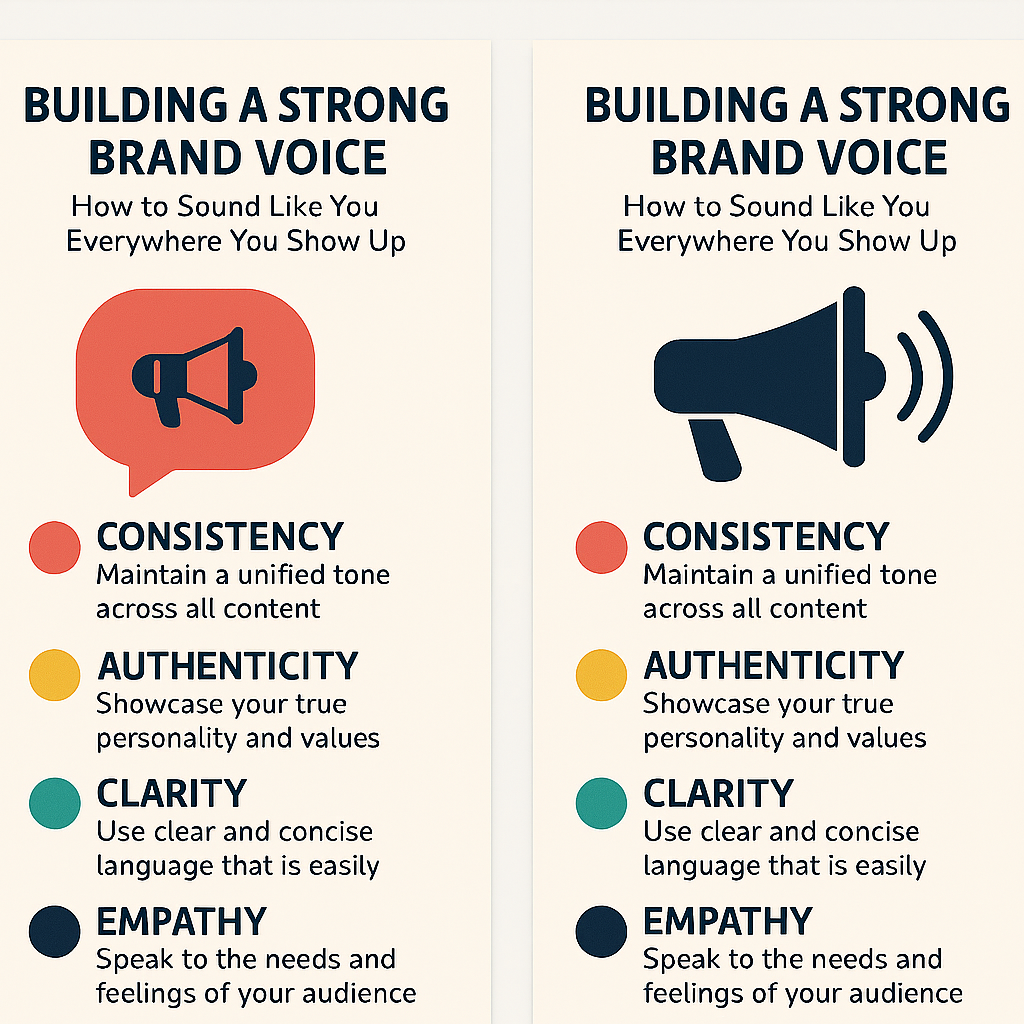
Whether intentional or not, every brand has a voice. Brand Voice: It’s in the words on your website, the captions on your social media posts, the emails you send, and even how you respond to customer complaints. The question isn’t whether you have a brand voice. The question is: Is it clear, consistent, and memorable? A strong brand voice helps people recognize you instantly, trust you faster, and feel connected to your brand on a human level. In a world full of noise, your voice is what makes people stop scrolling and start listening. Let’s talk about how to build a brand voice that sounds real, consistent, and unmistakably yours. What Is Brand Voice, Really? Brand voice is the personality of your brand expressed through words. How you say something is just as important as what you say. Think of brand voice as how your brand would talk if it were a person. Are you friendly or formal? Playful or serious? Bold or calm? Supportive or authoritative? For example: None of these voices are accidental. They’re carefully built and consistently used. Why a Strong Brand Voice Matters People don’t connect with products. They connect with personalities. A clear brand voice: When your voice is strong, people know what to expect from you. That familiarity creates comfort and comfort builds loyalty. Step 1: Understand Who You’re Talking To You can’t build a strong brand voice without knowing your audience. Ask yourself: A brand speaking to corporate executives will sound very different from one speaking to Gen Z creators. Your voice should feel natural to your audience, not forced or trendy. The goal is not to sound “cool.”The goal is to sound relevant and relatable. Step 2: Define Your Brand Personality This is where your brand voice really starts to take shape. A simple way to define your brand personality is to choose 3–5 personality traits. For example: Then ask: If your brand is friendly, it might use contractions, simple language, and a warm tone. If it’s confident, it avoids apologetic or uncertain wording. Defining both “we are” and “we are not” is key. Step 3: Create Clear Voice Guidelines A strong brand voice isn’t just in your head it’s documented. Your brand voice guidelines should include: This makes sure everyone—from marketers to customer support sounds like the same brand. Consistency builds trust. Inconsistency breaks it. Step 4: Keep It Human, Not Perfect One of the biggest mistakes brands make is trying to sound “professional” at the cost of sounding human. People don’t talk like legal documents. And brands that do often feel cold and distant. Human brand voices: You can still be professional and human at the same time. The two are not opposites. If it wouldn’t sound natural in a conversation, rethink it. Step 5: Be Consistent Across Every Touchpoint Your website shouldn’t sound like one person, your emails another, and your social media a third. A strong brand voice stays consistent across: That doesn’t mean the tone never changes. A support email may be calmer than a social post—but the personality stays the same. Think of it like mood changes, not personality changes. Step 6: Adapt Without Losing Yourself A strong brand voice is consistent—but not rigid. You can adapt your tone depending on: What matters is that your core personality remains intact. For example, a playful brand can be serious during a crisis without suddenly sounding corporate or robotic. Flexibility builds trust. Inconsistency breaks it. Step 7: Let Your Values Shape Your Voice Your brand voice should reflect what you stand for. If your brand values honesty, your voice should be transparent.If it values inclusivity, your language should be welcoming.If it values innovation, your voice should sound forward-thinking. People can sense when words don’t match values. Authenticity isn’t about saying the right things—it’s about sounding true. Common Mistakes to Avoid Here are a few things that weaken brand voice: Your voice should evolve over time but slowly and intentionally. Final Thoughts: Your Voice Is Your Identity A strong brand voice isn’t built overnight. It grows as you understand your audience better, clarify your values, and communicate with intention. But once it’s built, it becomes one of your most powerful assets. People may forget what you sold them but they won’t forget how you made them feel. So speak clearly. Speak consistently.And most importantly, speak like you mean it.

, , , , , , , , , , , , , , , , , ,

Building a Strong Brand Voice: How to Sound Like You Everywhere You Show Up Read Post »

Color Psychology in UI Design 2025 : How Colors Shape User Feelings, Decisions, and Behavior
Design

Color Psychology in UI Design 2025 : How Colors Shape User Feelings, Decisions, and Behavior

Color plays a much bigger role in UI design than most people realize. It’s not just about aesthetics or branding—it’s about psychology. The colors you choose for your interface directly affect how users feel, think, and act. From building trust to driving conversions, color psychology in UI design can make or break the user experience. In this article, we’ll explore what color psychology is, why it matters in UI/UX design, and how to use it strategically to create intuitive, engaging digital products. What Is Color Psychology in UI Design? Color psychology is the study of how colors influence human emotions and behavior. In UI design, it refers to using colors intentionally to guide users, communicate meaning, and create emotional responses. When users land on a website or open an app, their brain instantly processes color—often before reading any text. This first impression shapes how they perceive your product, whether they trust it, and how comfortable they feel using it. In short, color is not decoration. It’s communication. Why Color Psychology Matters for User Experience (UX) Research shows that people form opinions about a product within seconds, and color is one of the strongest contributors to that judgment. In UI design, the right color choices can: On the flip side, poor color choices can confuse users, cause visual fatigue, or make an interface feel untrustworthy—even if the product itself is excellent. How Colors Affect Human Emotions Humans naturally associate colors with emotions, memories, and experiences. These associations are influenced by nature, culture, and psychology. For example: In UI design, understanding these emotional triggers helps designers create experiences that feel intuitive and emotionally aligned with the product’s purpose. Meaning of Colors in UI Design Let’s look at the most commonly used UI colors and how they influence users. Blue: Trust, Security, and Calm Blue is one of the most popular colors in UI and UX design. It’s associated with reliability, calmness, and professionalism. Common use cases: Blue helps users feel safe, which is why companies like PayPal, Facebook, and LinkedIn use it heavily. However, too much blue can feel cold, so it’s often balanced with warmer accent colors. Red: Urgency, Attention, and Emotion Red is bold and powerful. It grabs attention instantly and creates a sense of urgency. Common use cases: While red is effective, overusing it can increase stress or anxiety. In UI design, red works best as an accent color rather than a dominant one. Green: Success, Growth, and Balance Green is strongly linked to nature, health, and positivity. It is easy on the eyes and helps to maintain equilibrium. Common use cases: Green often communicates “everything is working,” making it ideal for feedback and progress indicators. Yellow: Optimism and Awareness Yellow is cheerful and energetic, but it can also be overwhelming if used incorrectly. Common use cases: Because yellow has high visual intensity, it’s best used sparingly to draw attention without harming readability. Black and White: Simplicity and Focus Black and white are foundational colors in modern UI design. Minimalist interfaces rely heavily on white space to reduce cognitive load and guide users naturally through the interface. Purple: Creativity and Luxury Purple combines the calmness of blue and the energy of red, giving it a creative and premium feel. Common use cases: Used thoughtfully, purple can make a UI feel distinctive and memorable. Cultural Differences in Color Psychology Color meanings are not universal. Cultural context plays a major role in how users interpret colors. For example: For global products, it’s important to research cultural color meanings and test designs with diverse user groups. Color Accessibility in UI Design Good UI design is inclusive design. Color choices should work for everyone, including users with visual impairments or color blindness. Accessibility best practices include: An accessible color system improves usability and ensures your product reaches a wider audience. Using Color to Guide User Actions In effective UI design, color helps users understand what to do next—without instructions. Examples include: When users don’t have to think about where to click, your UI feels effortless and intuitive. Build a Color System, Not Just a Palette Instead of choosing random colors, successful products use structured color systems. A strong UI color system includes: This consistency improves scalability, usability, and brand recognition over time. Final Thoughts: Color Is a Silent UX Tool Color psychology in UI design is about empathy, not trends. The best interfaces don’t overwhelm users—they guide them gently, build trust, and create emotional comfort. When color is used intentionally, users may not notice it—but they’ll feel the difference. Before choosing a color, ask:“What should the user feel at this moment?” That question alone can transform your UI design.

, , , , , , , , , , , , , , , , , ,

Color Psychology in UI Design 2025 : How Colors Shape User Feelings, Decisions, and Behavior Read Post »

The 2026 Insurance Playbook: Protect Your Company From Every Major Risk
Business Management

The 2026 Insurance Playbook: Protect Your Company From Every Major Risk

The 2026 Insurance Playbook: Protect Your Company From Every Major Risk :- Running a business in 2026 isn’t for the faint of heart. Every year seems to bring new surprises AI-driven cyberattacks, unpredictable weather, supply-chain chaos, lawsuits from every direction, and technology that evolves faster than most companies can keep up. If you’re a business owner, founder, or manager, you already know one thing for sure: risks aren’t going away. They’re multiplying. But here’s the good news: while you can’t eliminate risk completely, you can design an insurance strategy that protects your company from financial damage, legal headaches, and operational breakdowns. Think of it as your playbook—your defense system—for surviving anything 2026 throws your way. Let’s walk through the essential steps to build a strong, modern, and “almost risk-proof” insurance strategy for your business. 1. Start With a 2026 Risk Checkup Before you buy any insurance policy, you need to understand the battlefield. What threats pose the biggest danger to your business today? In 2026, the top risks most companies face include: Spend time listing every possible risk your business could face. Big or small. Internal or external. This simple exercise helps you match the right insurance solutions to real-world threats—saving you money and preventing gaps later. 2. Build Your Insurance Stack: The Must-Have Policies for 2026 Think of your insurance policies like bricks in a wall. Each one protects you from a different angle. Put together, they make your business strong enough to survive almost anything. Here are the policies every company should consider in 2026. General Liability Insurance: Your Core Protection This is the foundation of your safety net. It protects you from common business risks like customer injuries, property damage, and legal claims. Without it, you’re leaving your business wide open. Cyber Liability Insurance: The 2026 Non-Negotiable Cybercrime has become the biggest threat to modern businesses—especially small and medium-sized ones. Hackers are using advanced AI tools, and a single attack can shut a business down for weeks or destroy customer trust overnight. Cyber insurance typically covers: If your business uses email, stores customer data, or works online in any way (which is basically everyone), you need this. Commercial Property Insurance: Protect Your Space and Equipment Whether you own or rent your business location, property insurance covers things like: In 2026, many insurers offer special climate-focused add-ons that help cover flood damage, severe storms, or wildfire risks—problems that have become more common in the last few years. Business Interruption Insurance: Your Lifeline During Shutdowns If your business had to shut down for a week—or worse, a month—could it survive? This insurance helps cover: Many companies fail not because the disaster was big, but because they couldn’t stay afloat during the downtime. This policy fills that gap. Professional Liability Insurance (Errors & Omissions) If you provide a service—consulting, design, coaching, finance, IT, real estate, marketing—this protects you from claims that your work caused financial harm. In 2026, with clients becoming more litigious and industries becoming more regulated, this policy is an absolute must. Workers’ Compensation Insurance This covers employee injuries, medical bills, and lost wages. In most regions, it’s legally required. More importantly, it protects your team and prevents workplace injury lawsuits. Commercial Auto or Fleet Insurance If your business uses cars, trucks, or vans—even occasionally—commercial auto insurance protects you from accidents, damage, and liability claims. Optional but Powerful Add-Ons for 2026 These aren’t mandatory, but depending on your business, they can save you from major losses: In 2026, businesses often rely on technology and people more than physical products—so these policies fill important gaps. 3. Save Money by Bundling Smartly Insurers often offer discounts if you combine multiple policies into a package, commonly called a Business Owner’s Policy (BOP). This usually includes: Bundles simplify coverage and reduce costs—sometimes by 20% or more. 4. Partner With a Skilled Insurance Broker Insurance can be confusing, full of fine print, and sometimes downright overwhelming. A good broker acts as your guide. They help you: In 2026, when risks and rules are changing fast, having a professional on your side is a smart move. 5. Update Your Strategy Every Year Your business evolves—your insurance needs should too. Review your coverage after major changes like: A quick annual refresh helps you stay protected and keeps your premiums fair. Final Thoughts: A Risk-Free Company Is a Prepared Company You can’t control the world around you, but you can control how well your business is protected. With the right insurance mix, solid risk assessment, and a modern strategy, your company can withstand cyber threats, disasters, legal issues, and unexpected disruptions.

, , , , ,

The 2026 Insurance Playbook: Protect Your Company From Every Major Risk Read Post »

How to Build a Risk-Free Company With the Right Insurance Strategy in 2026
Business Management

How to Build a Risk-Free Company With the Right Insurance Strategy in 2026

How to Build a Risk-Free Company With the Right Insurance Strategy in 2026 : Running a business in 2026 is exciting but also risky. From cyber threats and regulatory changes to accidents, lawsuits, and natural disasters, business owners face countless potential pitfalls. The good news? A smart insurance strategy can dramatically reduce your risks, protect your assets, and give you peace of mind to focus on growth. In this guide, we’ll explore how to build a “risk-free” company by combining the right types of insurance, proactive planning, and ongoing risk management. Step 1: Identify Your Biggest Risks Before purchasing any insurance, you need a clear picture of your business risks. Ask yourself: Understanding your unique risks allows you to choose insurance policies that provide real protection rather than generic coverage. Step 2: Invest in Core Insurance Policies Most businesses benefit from a few core types of insurance: 1. General Liability Insurance Covers bodily injury, property damage, and certain advertising claims. Essential for any business that interacts with clients or customers. 2. Professional Liability Insurance Protects against mistakes, errors, or negligence in professional services. Critical for consultants, agencies, and service-based businesses. 3. Cyber Liability Insurance Covers data breaches, ransomware attacks, and other digital threats. In 2026, cyber coverage is essential for almost every company. 4. Business Interruption Insurance Protects your revenue and operational costs if your business is temporarily unable to operate due to a covered event. 5. Property and Equipment Insurance Covers damage or theft of your office, equipment, or inventory. Even remote-based businesses benefit from this coverage. 6. Workers’ Compensation Required in most regions if you have employees, covering workplace injuries and medical costs. By combining these policies, you create a solid foundation that covers most major risks. Step 3: Consider Additional Coverage Based on Your Industry Some industries have specific risks. For example: Tailoring coverage ensures your strategy is precise, cost-effective, and fully protective. Step 4: Bundle and Optimize Policies Many insurers offer Business Owner Policies (BOPs) that bundle general liability, property, and business interruption insurance. Bundling can: Additionally, some insurers provide add-ons or riders that let you customize coverage for your specific risks, like cyber threats or supply chain interruptions. Step 5: Implement Risk Management Practices Insurance works best when paired with proactive risk management. Consider: The combination of insurance and risk prevention reduces both the likelihood and impact of incidents. Step 6: Review and Update Policies Annually Your business will grow, evolve, and face new risks. Annual reviews ensure: Regular updates prevent gaps that could leave your company exposed. Step 7: Work With Experienced Insurance Advisors The right advisor can help: Choosing an insurer or broker with experience in your industry is key to building a truly “risk-free” strategy. The Benefits of a Strong Insurance Strategy A comprehensive, proactive insurance plan does more than protect your assets. It: In short, insurance doesn’t just prevent losses—it empowers your business to thrive confidently in an unpredictable world. Final Thoughts: A Risk-Free Company Is Possible With the Right Plan While no business is 100% risk-free, you can get pretty close with a smart insurance strategy. In 2026, threats are evolving, and businesses that ignore protection are taking unnecessary chances. By identifying risks, investing in the right policies, implementing risk management practices, and reviewing coverage regularly, you can build a company that’s resilient, secure, and poised for long-term success. Remember: the goal isn’t to eliminate risk entirely it’s to manage it intelligently. Insurance is your safety net, risk management is your toolkit, and together, they form the foundation of a strong, thriving business.

, , , , , , ,

How to Build a Risk-Free Company With the Right Insurance Strategy in 2026 Read Post »

General Liability vs Professional Liability: What’s the Difference in 2026?
Business Management

General Liability vs Professional Liability: What’s the Difference in 2026?

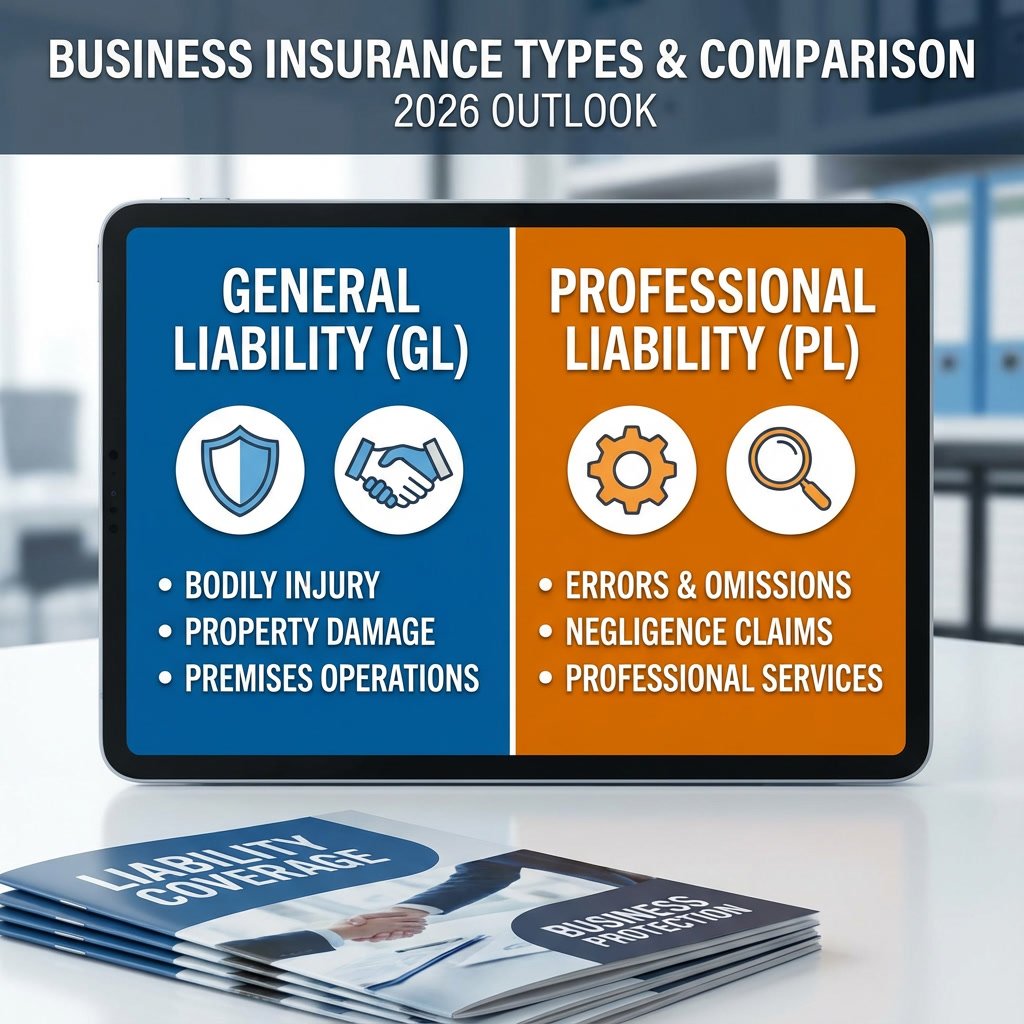
General Liability vs Professional Liability: If you’re a business owner in 2026, chances are you’ve heard these terms tossed around: general liability and professional liability. They sound similar, but confusing them or worse, skipping one can leave your business exposed to serious financial risk. Understanding the difference is key to protecting your company, your employees, and your clients. Let’s break down what each policy covers, why it matters, and how to decide which coverage your business needs. What Is General Liability Insurance? General liability insurance (GL) is the foundation of most business insurance plans. It protects your business from physical risks and common accidents that could happen to clients, customers, or visitors. Think of it as broad protection for everyday business operations. Common Coverage Includes: GL insurance is typically required for businesses with physical locations or frequent customer interactions. Even if you operate from home, it’s often recommended to avoid personal liability exposure. What Is Professional Liability Insurance? Professional liability insurance, also called errors & omissions (E&O) insurance, protects businesses that provide services, advice, or professional expertise. Unlike GL insurance, it’s designed for financial or professional mistakes rather than physical accidents. Common Coverage Includes: This type of insurance is crucial for consultants, accountants, architects, software developers, marketers, agencies, and any business providing professional guidance or services. Key Differences Between General and Professional Liability Feature General Liability Professional Liability Coverage Type Physical injury, property damage, advertising injury Financial loss due to mistakes, negligence, or professional services Who Needs It Retailers, restaurants, contractors, businesses with customer traffic Consultants, agencies, professionals offering services/advice Common Claims Slip-and-fall, property damage, defamation Misadvice, missed deadlines, faulty services, software bugs Legal Defense Covers lawsuits from physical/property issues Covers lawsuits from professional mistakes or negligence In short: GL protects your business physically, while professional liability protects your professional expertise and advice. Do You Need Both? Many businesses actually need both types of insurance. Here’s why: For example, a marketing agency might have a client visit the office (GL coverage for accidents) while also delivering a campaign that inadvertently causes financial loss (professional liability coverage). Without both, the business could be exposed in either scenario. Tips for Choosing the Right Coverage in 2026 Common Mistakes Business Owners Make Why Understanding the Difference Matters Confusing these two types of insurance is more than a technicality—it’s a risk management issue. A misstep could cost your business thousands or even millions if an incident occurs. Knowing the difference allows you to: Final Thoughts: Coverage That Fits Your Business In 2026, businesses operate in an environment of increasing risk: cyber threats, lawsuits, and regulatory scrutiny are on the rise. Proper insurance is not just a safety net—it’s a tool to build resilience, credibility, and peace of mind. By understanding general liability and professional liability, and securing the right coverage for your business type, you ensure that accidents, errors, or professional missteps won’t derail your growth. Think of it as a shield for both the physical and intellectual sides of your business—protection for what you do and where you do it.

, , , , , , ,

General Liability vs Professional Liability: What’s the Difference in 2026? Read Post »

Business Interruption Insurance in 2026: Keeping Your Company Running When Disaster Strikes
Business Management

Business Interruption Insurance in 2026: Keeping Your Company Running When Disaster Strikes

Imagine this: your business faces a fire, a storm, or a cyberattack that halts operations for days—or even weeks. Without a plan, lost revenue, ongoing expenses, and delayed recovery can put your company in serious jeopardy. This is where business interruption insurance becomes a lifeline. In 2026, with evolving risks—from climate-related disasters to cyberattacks—business interruption coverage is no longer optional. For startups, small businesses, and even established companies, it provides financial protection and peace of mind when unexpected events threaten daily operations. What Is Business Interruption Insurance? Business interruption insurance, sometimes called business income insurance, helps cover lost income and operational expenses if your business cannot operate due to a covered event. Unlike standard property insurance, which replaces damaged assets, business interruption insurance ensures that your cash flow continues while your business recovers. Typical expenses covered include: Essentially, it helps your business stay afloat, even when normal operations are disrupted. Why Business Interruption Insurance Matters in 2026 Modern businesses face a variety of risks that make this coverage crucial: Business interruption insurance ensures that, no matter the disruption, your business can survive and recover. How Business Interruption Insurance Works Here’s a simple example: Most policies require that the interruption is caused by a covered event, so it’s important to understand the details of your policy. Some events, like floods or earthquakes, may require additional coverage. What Business Interruption Insurance Typically Covers Business interruption insurance generally covers: Choosing the Right Policy in 2026 Selecting the right business interruption coverage requires careful planning: 1. Understand Your Risks Analyze your business operations, industry, location, and digital systems. Identify potential threats—physical and digital—that could interrupt operations. 2. Estimate Your Revenue Needs Know how much income your business needs to cover operating costs during downtime. Policies should align with these estimates to provide adequate protection. 3. Include Digital and Cyber Risks Modern businesses rely heavily on technology. Ensure your policy accounts for cyber incidents that can halt operations. 4. Consider Extra Expenses Temporary relocation, equipment rental, or expedited repairs may be necessary. Include these potential costs in your coverage plan. 5. Review Policy Exclusions Check for exclusions such as floods, earthquakes, or pandemics, and consider additional coverage if needed. Common Mistakes to Avoid Avoiding these mistakes ensures your business interruption insurance truly protects your company. The Real Value of Business Interruption Insurance In 2026, business interruption insurance isn’t just about replacing lost revenue. It’s about: For businesses of all sizes, this coverage is an essential safety net. Final Thoughts: Prepare for the Unexpected Business interruption insurance is the bridge between disaster and recovery. In a world where natural disasters, cyber threats, and operational disruptions are increasingly common, having a safety net in place ensures your business can survive and thrive. By understanding your risks, choosing the right policy, and regularly updating coverage, you can protect your revenue, employees, and long-term growth. In 2026, businesses that plan for the unexpected are the ones that succeed—because they don’t just survive disruptions—they recover stronger than before.

, , , , , , ,

Business Interruption Insurance in 2026: Keeping Your Company Running When Disaster Strikes Read Post »

Scroll to Top