
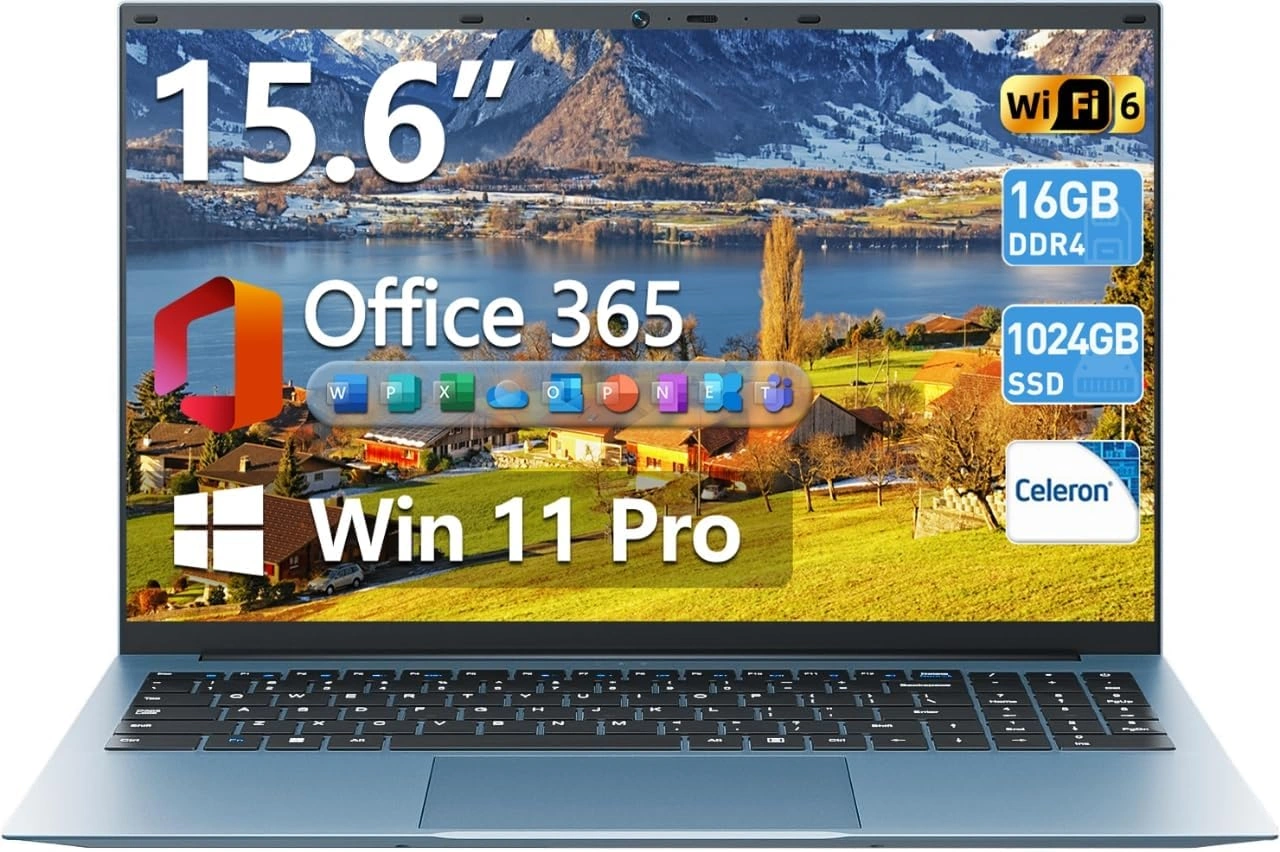
Naclud 15.6 Inch Laptop Computer, Windows 11 Laptops with 16GB RAM 1024GB SSD,
This budget-friendly Windows laptop is designed for students, professionals, and casual users who need a portable, reliable device for everyday computing. It features a lightweight, compact design, making it easy to carry between classes, work, or travel.
Equipped with a Windows operating system, the laptop handles basic tasks such as web browsing, document editing, emails, streaming media, and online research with ease. It includes sufficient storage and RAM for standard applications, offering smooth performance for typical productivity and multimedia needs.
Specifications |
|
|---|---|
| Style | 16GB DDR4 1024GB SSD(Office 365) |
| Brand | Naclud |
| Model Name | Naclud-S15 |
| Screen Size | 39 Centimeters |
| Color | Gray |
| Hard Disk Size | 1024 GB |
| CPU Model | Celeron |
| Ram Memory Installed Size | 16 GB |
| Operating System | Windows 11 Home |
| Special Feature | Memory Card Slot |
| Graphics Card Description | Integrated |
Naclud 15.6 Inch Laptop Computer
Don’t wait — take your computing on the go with this lightweight laptop
What a “Budget Windows Laptop” Typically Offers
These laptops tend to provide:
- A basic but functional processor — enough for everyday tasks like browsing, writing documents, reading emails, streaming, and light productivity.
- Compact, light build — making them suited for portability, travel, study, cafés, libraries.
- Modest RAM and storage (sometimes minimal) — generally adequate for simple tasks without heavy multitasking.
- Basic display and features — enough for web browsing, text editing, watching videos; usually not high‑end graphics or advanced media editing.
Because of their modest hardware, they’re often inexpensive — making them accessible for students, casual users, or anyone needing a second computer.
When Such a Laptop Is “Good Enough”
It’s a reasonable choice if you aim to:
- Do lightweight tasks: writing, web browsing, email, online research, reading, streaming media, simple office work.
- Have a portable machine for on‑the‑go use (classes, university, study sessions, cafés, travel).
- Keep costs down — as a budget-friendly or secondary device rather than a power workstation.
- Use software that doesn’t require high performance — e.g. word processing, presentations, browsing, light media consumption.
In short: as a starter laptop, student or work‑on‑the-go machine, or backup device, such a laptop can be practical and sufficient.
Typical Limitations / What to Watch Out For
Because of their price and hardware constraints, budget laptops often come with trade‑offs:
- Processor power is limited — heavy workloads, many browser tabs, video editing, or demanding programs may cause slowdowns.
- RAM or storage may be minimal — this can hinder multitasking, slow down performance over time, or limit storage space for files.
- Display and build quality tend to be basic — screen resolution, colour accuracy or build robustness may be modest; not ideal for creative work or long-term durability.
- Limited upgrade potential — some have soldered components (RAM, storage), making future upgrades difficult or impossible.
- Not future-proof for demanding tasks — as software and tasks get heavier, such laptops may struggle or become obsolete faster than mid‑range or high‑end machines.
Thus, if you expect heavy use, long-term performance, or growth in workload, a budget laptop may quickly become limiting.
Verdict: When to Buy — When to Look Higher
- Buy — if you want a cheap, portable laptop for everyday/basic use: browsing, documents, studies, travel, casual media, light work.
- Consider upgrading — if you plan heavier workloads: multitasking, creative work (video/photo editing), programming, gaming, or long‑term durability; in such cases, investing in a more powerful, upgradeable laptop makes more sense.